The optical shop you choose determines far more than which frames end up on your face. It determines how well your lenses are fitted to your prescription, how comfortable your glasses feel after eight hours of wear, how thoroughly your lens options are explained to you, and whether you have a knowledgeable professional to call when your frames need adjustment or repair six months after you picked them up. In Mechanicsburg, PA, the difference between a transactional experience and a genuinely useful one comes down to a handful of qualities that are easy to evaluate once you know what to look for.
The Fitting Experience: How Thorough Is It?
The fitting is where the quality of an optical shop reveals itself most clearly. At most chain optical retailers, the process is predictable: you finish your exam, receive your prescription, browse frames largely on your own, and sit with a sales associate who confirms your selection and processes your lens order. The experience is efficient. It is not particularly personalized.
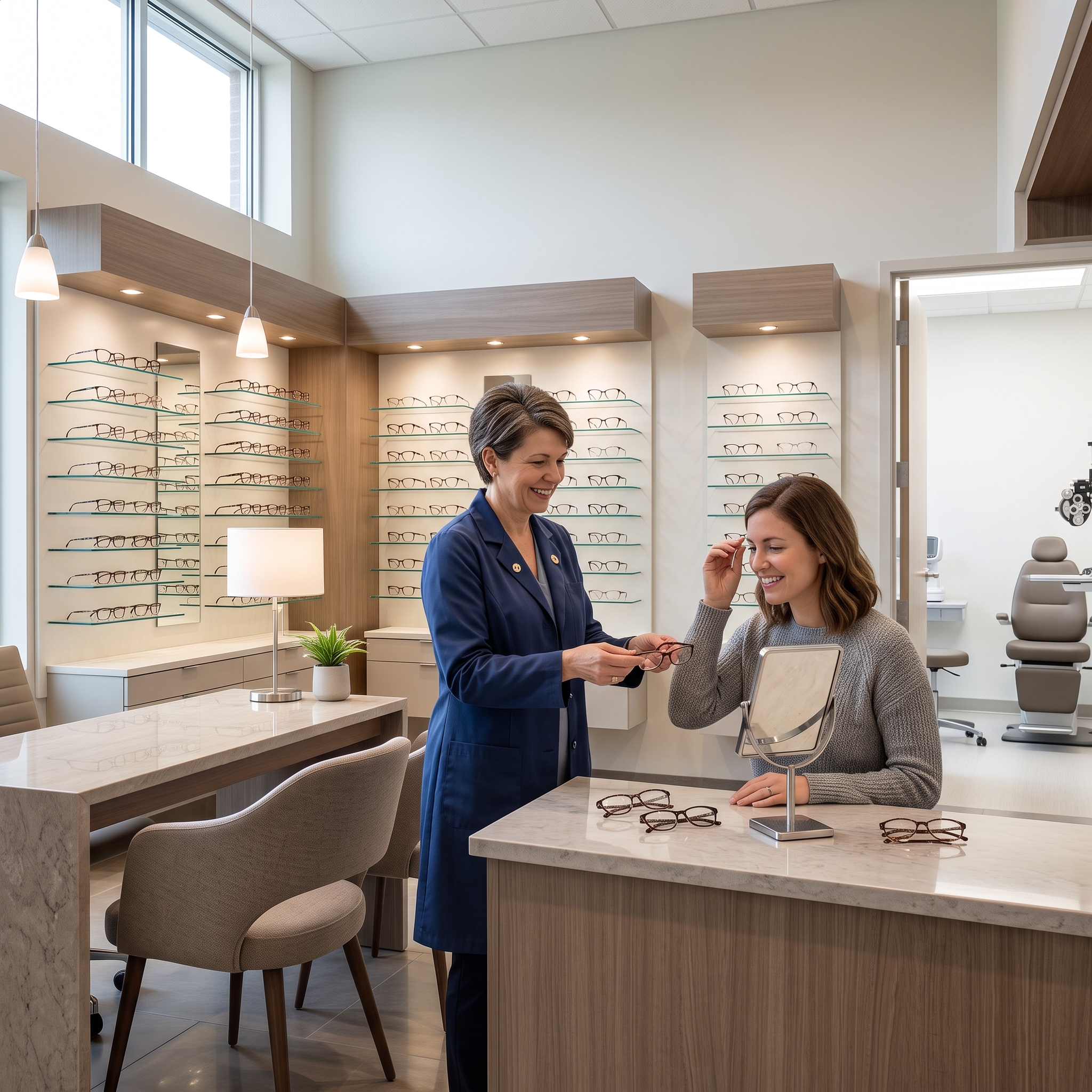
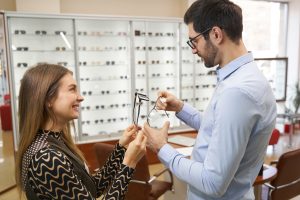
At an independently owned optical shop, the experience looks different. An optician personally guides you through finding a style, color, and frame shape that fits your personality, then makes suggestions on what type of lenses would best suit your lifestyle and your chosen frame.
The difference matters because eyewear is both a medical device and something you wear on your face every day. A frame that looks attractive on a display may sit incorrectly on your specific facial structure, causing the optical centers of the lenses to misaligned with your pupils. Facial measurements ensure that when lenses are inserted into a frame, they are aligned appropriately with the patient’s pupils. That precision is what separates glasses that correct your vision accurately from ones that cause strain, headaches, or blurred peripheral vision. It requires both skill and time, and it does not happen when the fitting process is rushed.
Look for an optical shop where the optician asks questions about your lifestyle before showing you frames. Your occupation, how many hours a day you spend on screens, whether you drive at night frequently, and whether you play sports are all relevant to which frame shape, lens type, and coating options serve you best. An optician who skips these questions is fitting the frame to your face but not your eyewear to your life.
Hampden Optical has served Mechanicsburg and surrounding Central Pennsylvania communities for more than 25 years. Owners Noelle and Michele are both board certified opticians with more than 25 years of individual experience, and they approach every fitting with the depth of attention that comes from treating eyewear as a craft rather than a transaction.
Lens Expertise: Can They Explain the Options Clearly?
Lenses are where most of the optical performance lives, and they are also where most of the upselling pressure tends to concentrate in chain retail environments. A good optical shop educates you on lens options rather than directing you toward whatever margin is highest.
Expert opticians understand lens technology, frame geometry, and how to optimize both for your unique needs. They have the depth of knowledge needed for complex prescriptions or specialized lens needs.
The lens conversation at a quality optical shop covers material options including standard plastic, polycarbonate, high-index, and trivex, and explains the practical tradeoffs of each in plain language. It covers coating options including anti-reflective, blue light filtering, UV protection, and scratch resistance, with a clear explanation of which ones are genuinely worth the additional cost for your specific situation. It addresses whether your prescription calls for single vision, bifocal, or progressive lenses, and for progressive lens wearers, it explains the differences between standard progressive corridors and freeform digital progressives.
If you wear progressives, ask about freeform progressives. If you drive at night, ask about anti-reflective coatings. These conversations are where independent optical shop value really shows.
A shop where the optician can answer follow-up questions on any of these topics without consulting a brochure is a shop where the lens expertise is genuine rather than scripted. One where the lens recommendation defaults to the highest-tier option without a clear explanation of why it suits your specific prescription and lifestyle is one where the sales priority may be outweighing the clinical one.
Long-Term Service: Will They Stand Behind the Work?
Eyeglasses are not a one-time purchase. They are an ongoing relationship with the shop that made them. Frames need periodic adjustment as they loosen or bend slightly with use. Nose pads wear out. Hinges tighten and loosen. Lenses occasionally chip or scratch in ways that warrant a remake under warranty. How a shop handles these situations after the initial sale is a meaningful indicator of what kind of optical practice they run.
A real boutique optical shop will heat-adjust your frames for free as long as you own them. Tighten hinges. Replace nose pads. Re-tension rimless mounting. Send frames back to the manufacturer under warranty. Chain stores can technically do adjustments, but they are incentivized to sell you a new pair rather than adjust the existing one. Boutiques are incentivized to keep you happy as a long-term customer.
Before committing to an optical shop, ask directly about their adjustment and repair policy. Do they adjust frames purchased there at no charge? Do they handle manufacturer warranty claims on their behalf or direct you to the manufacturer yourself? Do they have the tools and parts to perform basic repairs in the shop? The answers tell you whether the relationship ends at the point of sale or continues for as long as you own the glasses.
Optical shops stock repair parts and have the tools to properly and safely adjust and repair eyewear. They also offer education and information about new products that can provide you with better vision. Unlike online retailers, local shops can, in some cases, make glasses while you wait, handle warranty issues, and repair broken glasses on the spot.

Independent vs. Chain: What the Distinction Actually Means
The independent versus chain comparison in optical retail comes down to three measurable differences that affect your experience directly.
Boutique optical practices differ from chain retailers in three measurable ways: curation, meaning 40 to 150 frames versus 800 to 3,000; staffing, meaning licensed opticians with five or more years of experience versus commission-driven sales associates; and time per fitting, meaning 45 to 90 minutes versus 15 to 25 minutes. The result is a fundamentally different buying experience optimized for fit, design authorship, and long-term frame life rather than insurance-throughput sales.
Neither format is wrong for every person. A chain optical retailer delivers efficiency and wide frame inventory, and for straightforward prescriptions and homeowners who primarily want coverage through their vision plan, that experience is adequate. For anyone with a more complex prescription, a strong preference for specific frame quality or independent brands, or a desire for a fitting experience that takes their lifestyle into account, an independent optical shop consistently delivers a more complete result.
Independent optical shops carefully curate their collection of frames, often bringing in exclusive lines and handcrafted brands not available at larger retailers. The process is never rushed, and each fitting is handled with attention to comfort, style, and precision.
Signs You Have Found a Good Optical Shop
Here are signs you have found a good optical shop: They ask about your life before showing you frames. Your job, hobbies, and daily routine should inform the recommendation. They carry brands you have not heard of. They take their time. If the fitting feels rushed, it probably is. They explain the why. A good optician tells you why a particular frame works for your face, not just that it looks good. They stand behind their work.
Two additional signs worth noting from OpticianWorks, a professional training resource for opticians: you should feel both comfortable with and confident in the optician you are working with. Think of the optician exactly as you would a plumber or car mechanic. If they cannot answer basic questions or their work turns out to be poor, stop using them. Those are direct words from a 25-year industry professional, and they describe the standard you should hold any optical shop to before trusting them with your vision correction.
Insurance, Pricing, and What Transparency Looks Like
A quality optical shop explains your insurance benefits clearly before you begin selecting frames, not after you have already fallen in love with a pair outside your plan’s coverage tier. They tell you what your plan covers, what the out-of-pocket difference is for various frame price points, and how to get the most useful result within your benefit structure.
Transparency on pricing also means being clear about what is included in a quoted lens price and what is an add-on. Anti-reflective coating, UV protection, and scratch-resistant coating are sometimes presented as a package and sometimes priced individually. A shop that walks you through each line item and explains what each one does is one that respects your ability to make an informed decision rather than one that presents a final number and waits for a signature.
Hampden Optical currently participates with EyeMed, NVA, and Medicare for exam services and submits directly to other vision plans for reimbursement. Their comprehensive eye exams and eyewear dispensing are handled by the same team, which means your prescription, your eye health history, and your eyewear needs are managed as a coordinated whole rather than in separate transactions.

The Value of Integrated Eye Care and Eyewear Under One Roof
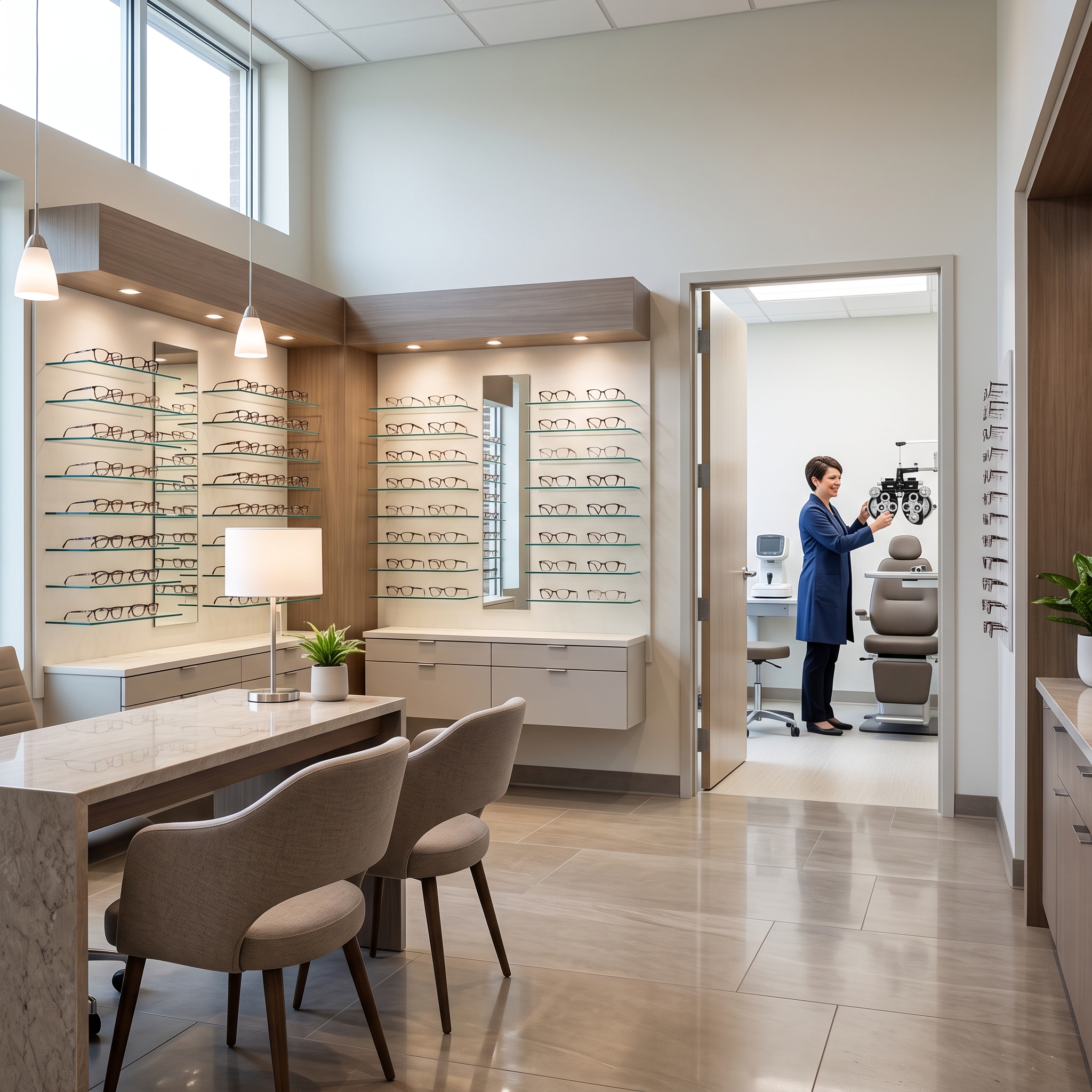
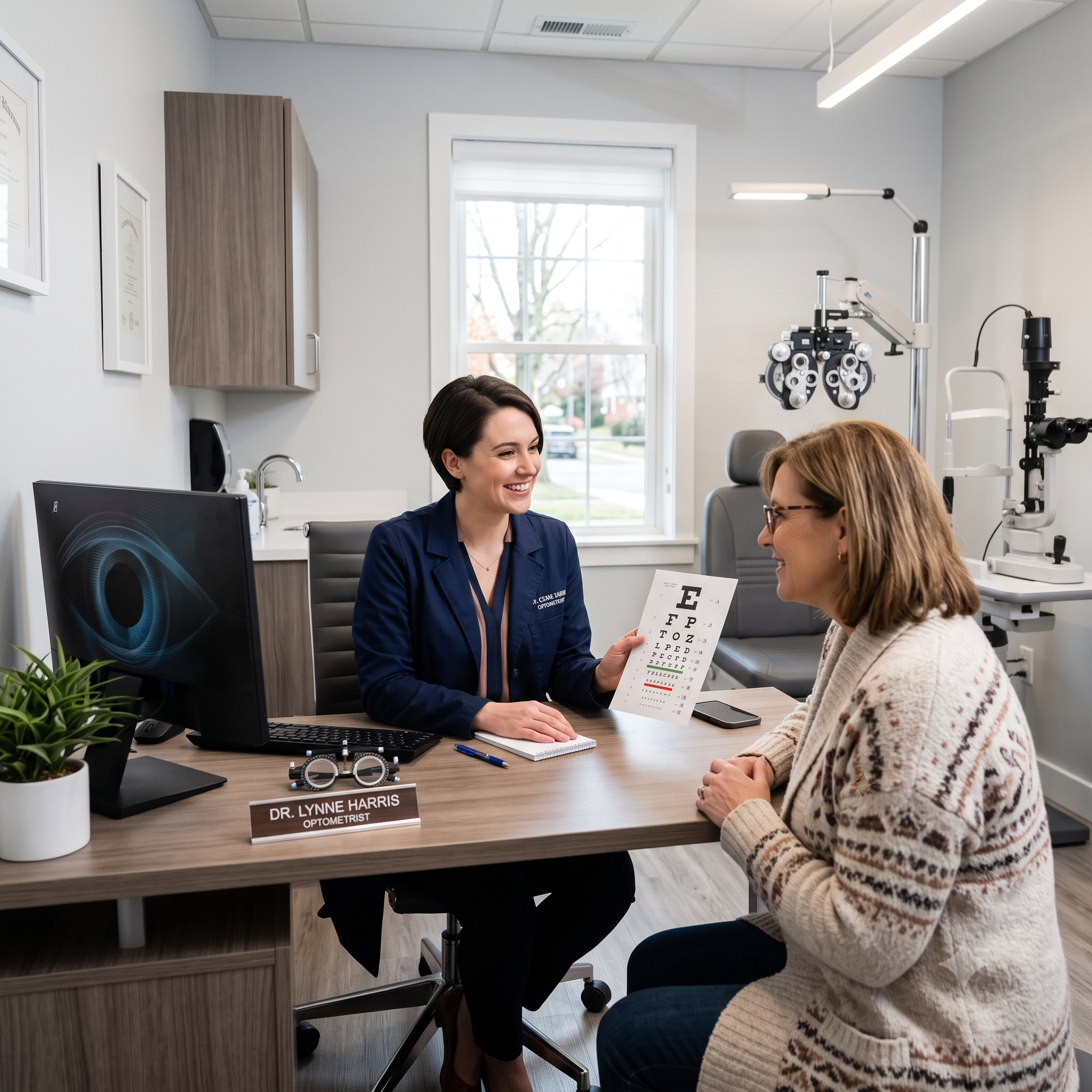
One of the most practical qualities to look for in an optical shop in Mechanicsburg, PA is whether the practice also provides eye exams. When your optometrist and your optician work in the same location, communication is immediate rather than delayed. A question about your prescription that arises during the fitting can be answered by the prescribing doctor without a phone call, a faxed document, or a return visit to a different office.
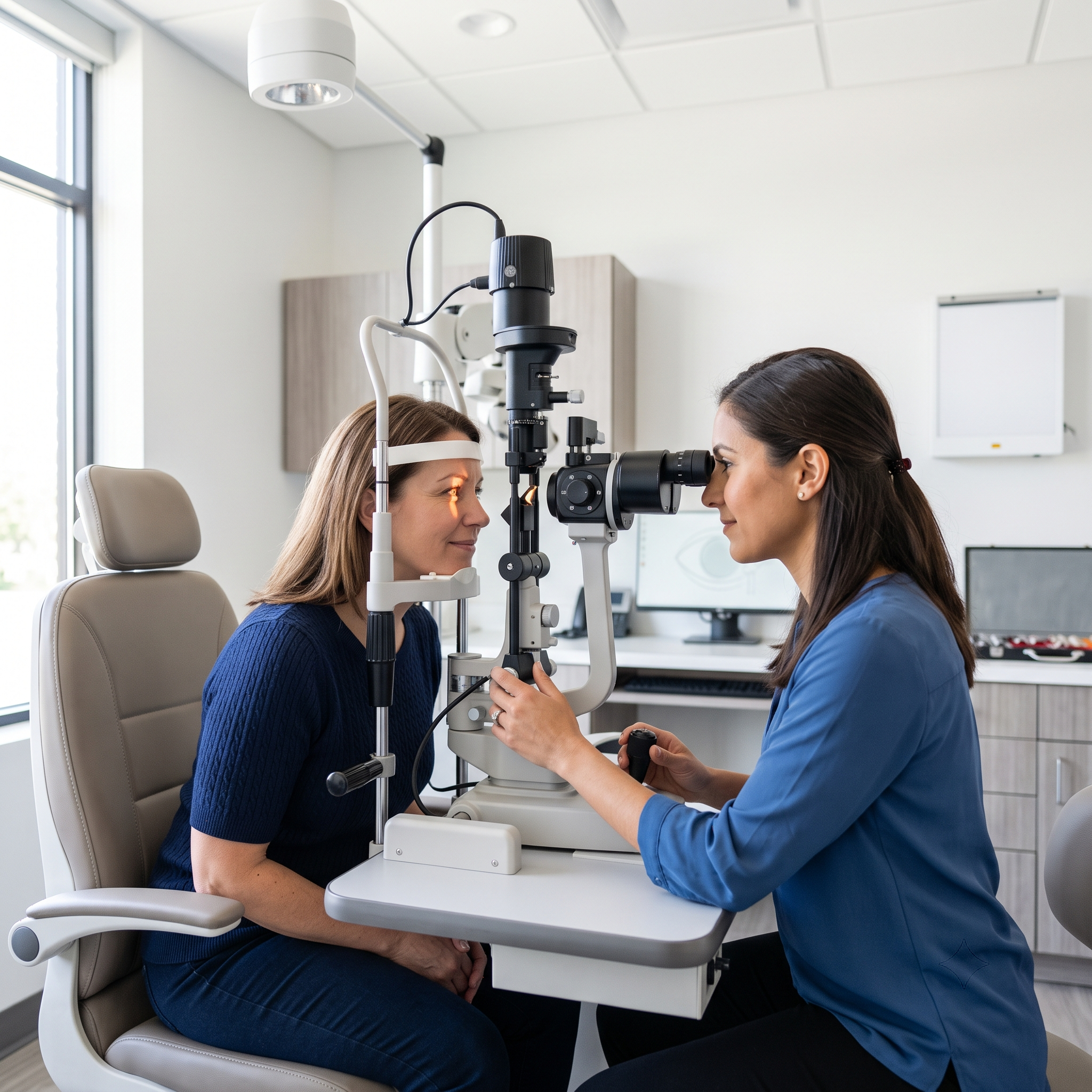
This integration matters most for patients with complex prescriptions, progressive lens needs, or conditions including dry eye that affect contact lens comfort and eyewear decisions simultaneously. It also creates better continuity of care over time. An optician who knows your prescription history, your previous frames, and how your vision has changed across multiple exams is better positioned to make useful recommendations than one who only knows what is on the current slip of paper.
Hampden Optical provides pediatric vision screening for children ages 5 and up alongside adult eye exams and full eyewear dispensing, making it a complete option for families in Mechanicsburg and surrounding Central Pennsylvania communities who want consistent care across all ages in a single location.
What to Bring to Your First Visit
Bring your current glasses if you have them. The optician can measure PD, bridge, and fit geometry from what is already working. Bring a rough budget range you are comfortable with. Good optical shop staff will not pressure you above it; they will show you the best options within it. Allow 90 minutes of unhurried time. Do not schedule this over a lunch break. The fitting is the experience.
Also bring your current prescription if you have one from a recent exam elsewhere, and be prepared to describe how your current glasses perform. Are they comfortable after a full day of wear? Do you notice any distortion at the edges of progressive lenses? Do you find yourself removing your glasses more often than you used to? These details inform the fitting before a single frame is tried on and help an experienced optician understand what your current eyewear is and is not doing for you.
The FAQs page at Hampden Optical addresses common questions about what to expect, insurance coverage, and the difference between a routine vision exam and a medical eye exam, which is useful reading before your first appointment.
Final Thoughts
What to look for in an optical shop in Mechanicsburg, PA comes down to the quality of the fitting experience, the depth of lens expertise, the clarity of pricing and insurance communication, the long-term service commitment, and whether the practice integrates eye care and eyewear dispensing under one roof. These qualities determine whether you leave with glasses that genuinely serve your vision and your lifestyle or with a product that merely matches the numbers on your prescription.
When you consider the cost over three to five years of daily wear, the per-day cost difference between a quality independent optical shop and a chain retailer shrinks to a few cents. The experience difference does not.
To experience what a personalized optical fitting looks like in practice, contact Hampden Optical at 717-901-3939. Located at 4900 Carlisle Pike, Mechanicsburg, PA 17050. Open Monday through Friday, 9am to 5pm.