Knowing what to ask at an eye exam turns a routine visit into a genuinely productive conversation about your vision and long-term eye health. Whether you are finding the right optometrist Mechanicsburg PA for the first time or returning for your annual checkup, arriving with a prepared list of eye exam questions means you leave with real answers rather than just a new prescription. According to the CDC, approximately half of all visual impairment and blindness in the United States can be prevented through early diagnosis and timely treatment. The questions you ask your eye doctor Mechanicsburg PA directly affect how much of that prevention you actually benefit from.
What the Exam Includes and What to Expect
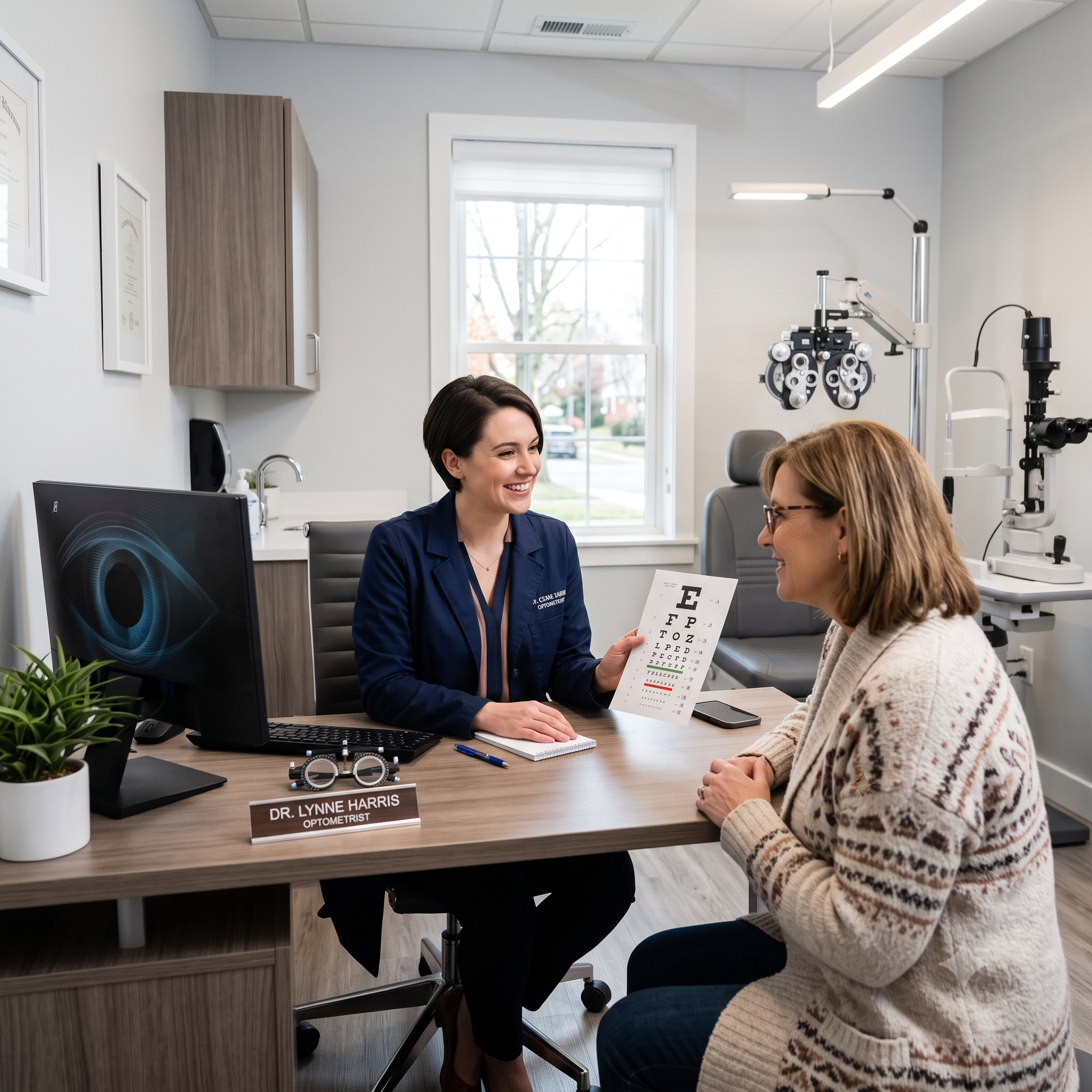
One of the most useful questions to ask before or at the start of your appointment is simply: what tests will be part of today’s exam? Knowing what to expect reduces any anxiety about the visit and helps you understand what each result means.
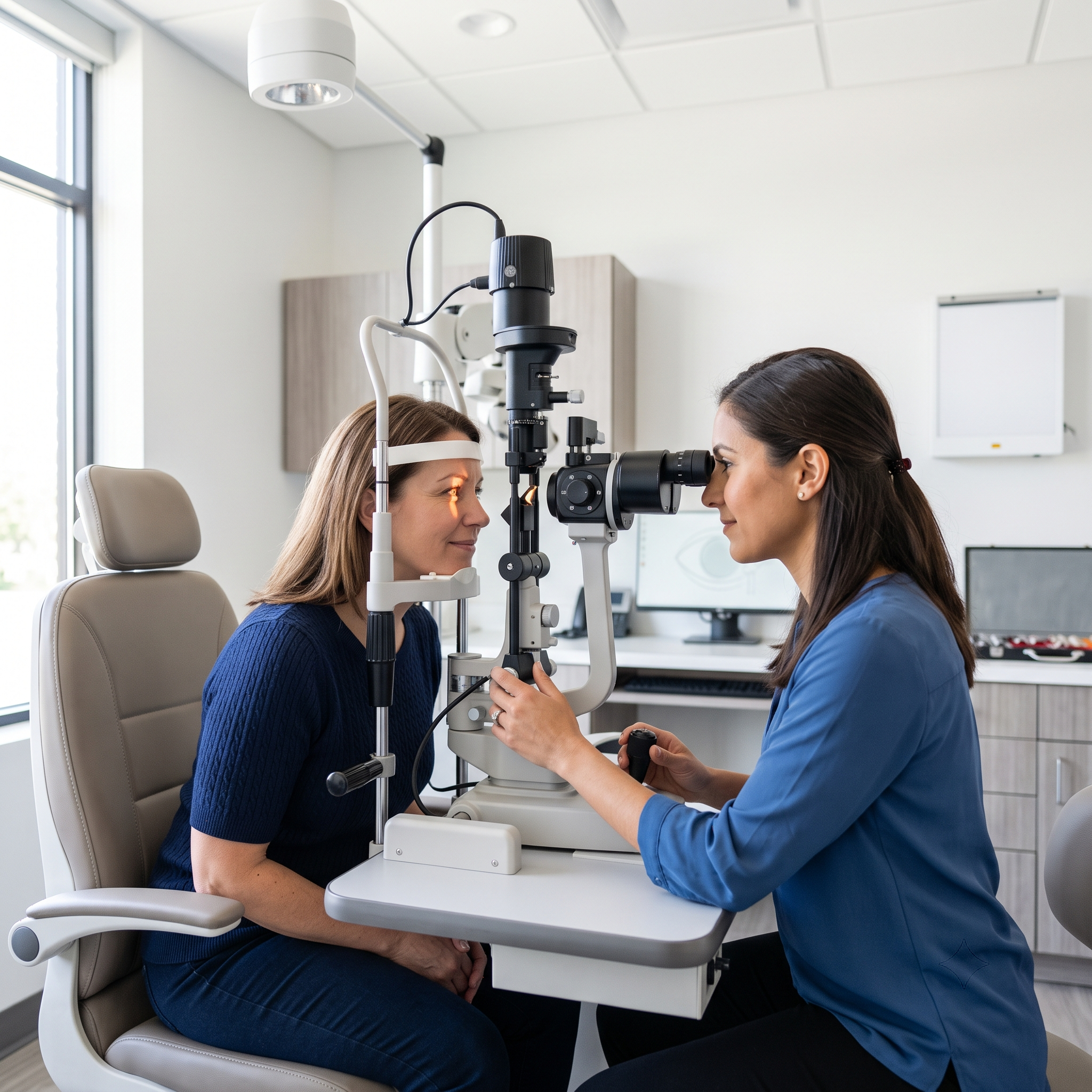
A comprehensive eye exam Mechanicsburg PA patients receive at a full service practice goes well beyond a vision chart. According to the American Optometric Association, a thorough exam includes a review of your health and vision history, visual acuity testing, refraction to determine your prescription, eye pressure testing to screen for glaucoma, and an evaluation of the external and internal structures of the eye including the retina and optic nerve.
Ask specifically whether dilation will be recommended. A dilated exam gives the doctor a wider view of the retina and internal eye structures, which improves detection of conditions including diabetic retinopathy, macular degeneration, and early glaucoma changes. Dilation temporarily blurs close-up vision and increases light sensitivity for a few hours, so it is worth knowing in advance whether you should arrange a driver.
Hampden Optical has served Central Pennsylvania for more than 25 years from 4900 Carlisle Pike in Mechanicsburg. The practice is led by Dr. David Paden OD, who completed a residency in referral-based optometry with an emphasis in ocular disease and refractive eye care at OMNI Eye Services of New Jersey, alongside owners Noelle and Michele, board certified opticians with more than 25 years of experience each.
Questions to Ask About Your Eye Health and Disease Risk
This is the category most patients skip, and it is where a comprehensive eye exam delivers the most long-term value. Many serious eye conditions including glaucoma, age-related macular degeneration, and diabetic retinopathy progress with few or no noticeable symptoms in their early stages. A 2022 study published in JAMA Ophthalmology found that approximately 4.22 million US adults have glaucoma, and about half are unaware they have it.
Questions worth asking about eye disease and risk:
- Were there any early signs of glaucoma, cataracts, macular degeneration, or diabetic eye disease in today’s exam?
- What was my intraocular pressure reading, and is it within the normal range?
- Does my family history put me at higher risk for any specific eye conditions?
- Do any of my current health conditions, such as diabetes or high blood pressure, increase my risk?
- Are there any findings from today I should monitor or watch between now and my next visit?
According to the CDC, glaucoma is often called the silent thief of sight because it can cause irreversible vision loss before a person notices any symptoms. Early detection through regular comprehensive exams is the most effective form of protection available.
Prevent Blindness estimates that approximately 19.83 million Americans are living with some form of age-related macular degeneration. Adults over 50 are at significantly elevated risk, and early detection allows for lifestyle and treatment changes that can meaningfully slow progression.
Questions to Ask About Your Prescription and Vision Correction
Your prescription is the most immediately practical result of the exam, and there is more to understand about it than the numbers on the page.
Useful questions about your prescription and correction options:
- Has my prescription changed since my last exam, and by how much?
- Am I nearsighted, farsighted, or do I have astigmatism, and what does that mean practically?
- Do I have any early signs of presbyopia, and what are my correction options?
- Are glasses or contact lenses better suited to my specific prescription and lifestyle?
- If I wear contacts, is my current lens type and replacement schedule still appropriate?
Presbyopia is the gradual loss of the eye’s ability to focus on nearby objects and affects the majority of adults over 40. It is a normal part of aging, but understanding how your current correction accounts for it, and what options are available including progressive lenses, bifocals, or multifocal contacts, helps you make a fully informed decision about your eyewear.
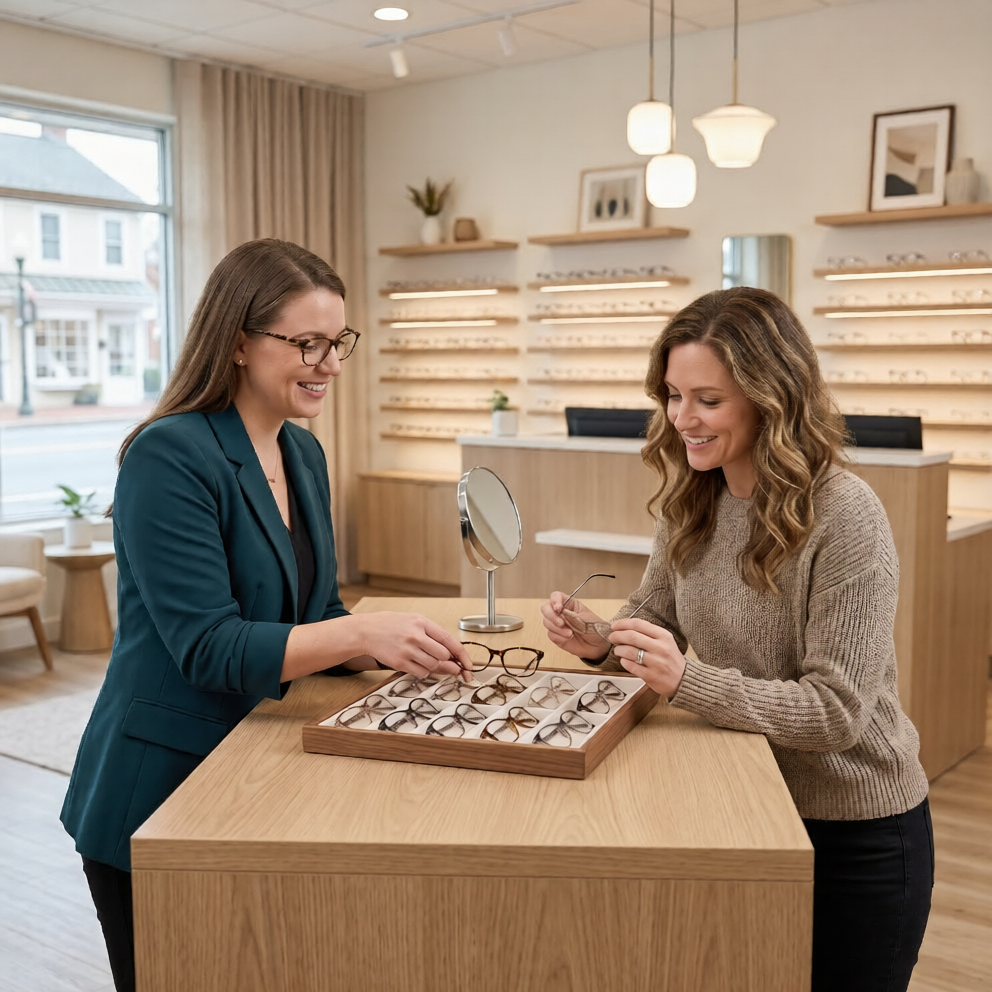
You can explore frame and lens options at Hampden Optical’s practice, which carries over 800 designer frames and offers custom lens solutions including progressives fitted by board certified opticians with decades of experience.
Questions to Ask If You Have Symptoms or Vision Changes
If you have noticed any changes in your vision or comfort between appointments, your exam is the time to raise them directly. Symptoms that feel minor can sometimes reflect early signs of a condition worth addressing.
Bring up any of the following and ask what they might indicate:
- Blurred vision at distance or up close, or at specific times of day
- Eye strain, headaches, or fatigue after reading or extended screen use
- Dry, itchy, burning, red, or watery eyes
- New floaters or flashes of light in your field of vision
- Sensitivity to light or difficulty adjusting between light and dark environments
- A sense that your current glasses or contacts are no longer as effective as they were
New floaters or sudden flashes of light in particular warrant prompt attention. These can be harmless age-related changes, but they can also be early indicators of retinal detachment, which requires urgent evaluation. When in doubt, report it directly rather than waiting.
Questions to Ask About How Often You Should Be Seen
Exam frequency is not one-size-fits-all. The right schedule depends on your age, health history, and whether any conditions were identified in your current visit.
The American Optometric Association recommends annual comprehensive eye exams for adults. More frequent monitoring is appropriate for patients with diagnosed eye conditions, diabetes, a family history of glaucoma, or significant prescription changes.
Questions to ask about scheduling:
- Based on today’s results, how often should I be coming in?
- Are there any findings that require a follow-up visit sooner than my regular schedule?
- At what point should I bring my child in for their first exam?
For children, the American Optometric Association recommends a comprehensive eye exam before kindergarten, and then annually once school begins. Vision problems in children frequently go undetected because children have no baseline for normal vision and often do not report symptoms. Hampden Optical’s pediatric vision screening serves children ages 5 and up, checking for nearsightedness, farsightedness, astigmatism, and eye coordination issues in a calm, child-friendly environment.
Questions to Ask About Contact Lenses
If you currently wear contacts, are considering switching from glasses, or want to explore different lens types, your exam appointment is the right time to have this conversation in full.
Questions worth asking about contact lenses:
- Am I a good candidate for contact lenses given my prescription and eye health?
- What contact lens type would work best for my eyes and lifestyle?
- Are there lens options that address dry eye or astigmatism?
- How does the replacement schedule affect eye health and infection risk?
- Should I be wearing my contacts differently based on today’s findings?
Contact lens technology has advanced considerably. Daily disposable lenses carry a lower infection risk than monthly options because they are replaced after each single use with no cleaning required. For patients with irregular corneas or more complex prescriptions, specialty options including scleral lenses may be worth discussing. Your optometrist can match you with the right option based on your specific prescription and how you use your eyes throughout the day.
Questions to Ask About Lifestyle and Long-Term Eye Health
Your daily habits affect your eyes over time, and a good eye doctor Mechanicsburg PA will give you specific, practical guidance based on your results and history.
Questions that produce actionable answers:
- What can I do between now and my next exam to protect my eye health?
- How should I manage screen time, and what does the 20-20-20 rule involve?
- Should I be wearing UV protective lenses or sunglasses more consistently?
- Are there dietary changes that would support my eye health?
- Do I need protective eyewear for any work tasks or activities?
The 20-20-20 rule involves looking at something at least 20 feet away for 20 seconds every 20 minutes of screen use. It reduces the eye strain and reduced blink rate that extended digital work causes. If you spend most of your working day at a screen, asking specifically about blue light lenses or computer-optimized progressive lenses is a worthwhile conversation.
The National Eye Institute notes that leafy greens, omega-3 rich foods, and antioxidants including vitamins C and E are associated with reduced risk of age-related macular degeneration. Asking your optometrist whether your diet and lifestyle support or undermine your eye health produces personalized guidance you cannot get from a general search.
Questions to Ask Before You Leave
Before wrapping up any exam, a few closing questions make sure nothing important goes unaddressed.
- Is there anything from today’s results I should watch or act on before my next visit?
- Are there any tests you recommend that were not part of today’s exam?
- What symptoms should prompt me to call before my next scheduled appointment?
- Does my insurance cover everything included today, and is there anything I should know about billing?
Hampden Optical currently participates with EyeMed, NVA, and Medicare for exam services. For vision plans where they are not in-network, the team will submit directly to your insurance provider for reimbursement. The FAQs page addresses common questions about routine versus medical exams, insurance coverage, and what to expect before you arrive.
Final Thoughts
The eye exam questions you ask your optometrist in Mechanicsburg, PA determine how much value you take away from every visit. Asking about disease screening results, prescription changes, contact lens options, exam frequency, symptoms, and lifestyle protection turns a standard checkup into a genuine investment in your long-term vision.
The CDC’s data is clear: half of all vision impairment and blindness in the United States can be prevented with early detection and timely treatment. That prevention depends on showing up regularly and asking the questions that move the visit beyond a basic chart reading.
To schedule a comprehensive eye exam in Mechanicsburg with a team that welcomes every question on this list, contact Hampden Optical at 717-901-3939. Located at 4900 Carlisle Pike, Mechanicsburg, PA 17050. Open Monday through Friday, 9am to 5pm.