A first eye exam Mechanicsburg PA typically takes between 45 minutes and one hour, involves no pain, and covers far more than reading letters off a chart. A comprehensive eye exam Mechanicsburg PA patients receive at a full-service practice includes a health history review, multiple vision tests, an evaluation of the internal and external structures of the eye, screening for conditions like glaucoma and macular degeneration, and a clear discussion of results before you leave. Knowing what to expect at an eye exam before you arrive makes the whole experience more comfortable and ensures you get the most out of every minute with your eye doctor.
How to Prepare for Your Eye Doctor Appointment
Preparation before a new patient eye exam is straightforward, but a few simple steps make the visit run more smoothly and give your optometrist a clearer picture of your eye health from the start.
Bring any glasses or contact lenses you currently wear. Your optometrist can assess whether your current correction is still appropriate and compare it against your new results. If you wear contacts, bring your lens brand and replacement schedule information as well.
Come prepared with your health and medication history. Many systemic conditions including diabetes, high blood pressure, and autoimmune disorders directly affect eye health, and medications can influence eye pressure, tear production, and even vision clarity. A thorough list of what you take, including over-the-counter supplements, helps your optometrist interpret your results accurately.
Write down any symptoms or vision concerns before you arrive. It is easy to forget details once you are sitting in the exam chair. If you have noticed blurred vision at specific distances, eye strain after screen use, floaters, light sensitivity, or any other changes since your last exam, noting them ahead of time means nothing important gets skipped.
Know your family history. Conditions including glaucoma, macular degeneration, and diabetic retinopathy have hereditary components. If a parent or sibling has been diagnosed with an eye condition, telling your optometrist is genuinely useful clinical information.
Bring your insurance card and arrive a few minutes early if it is your first visit. New patient paperwork at an eye doctor Mechanicsburg PA practice typically covers health history, current medications, vision insurance, and consent forms. Arriving with a few minutes to spare means the exam starts on time and your appointment does not feel rushed.
Hampden Optical has served Central Pennsylvania for more than 25 years from 4900 Carlisle Pike in Mechanicsburg. The practice is led by Dr. David Paden OD, who completed a residency in referral-based optometry with an emphasis in ocular disease and refractive eye care, alongside owners Noelle and Michele, both board certified opticians with more than 25 years of experience each.
What Questions Will the Optometrist Ask?
The exam begins with a conversation, not a test. Your optometrist Mechanicsburg PA will use the first few minutes to understand who you are as a patient before any clinical measurements are taken. This part of the visit informs everything that follows.
Expect questions in these areas:
Your Current Vision and Symptoms
Are you experiencing any blurred vision, double vision, eye strain, or discomfort? Have you noticed any new floaters, flashes of light, or changes in your peripheral vision? Are your current glasses or contacts working well for you?
Your Health History
Do you have any diagnosed health conditions, particularly diabetes, high blood pressure, thyroid disease, or autoimmune conditions? What medications are you currently taking? Have you had any eye injuries, surgeries, or previous diagnoses?
Your Family History
Has anyone in your immediate family been diagnosed with glaucoma, macular degeneration, cataracts, or diabetic retinopathy? Family history significantly affects your personal risk for these conditions and how frequently your eyes should be monitored.
Your Lifestyle and Visual Demands
How much time do you spend on screens each day? Do you work in an environment with specific vision demands, such as fine detail work, driving, or outdoor exposure? Do you play sports or engage in activities where eye protection is relevant?
Your honest, thorough answers to these questions shape how the exam is conducted and what the doctor pays closest attention to. There are no wrong answers, and nothing you share will be used to judge your habits. It is clinical information that makes your exam more useful.
What Happens During a Comprehensive Eye Exam
Once the health history discussion is complete, the clinical portion of the exam begins. A comprehensive eye exam at a full-service optometrist Mechanicsburg PA practice typically includes the following steps.
Visual Acuity Test
This is the part most people recognize. You will read letters of decreasing size from a chart, known as a Snellen chart, first with one eye covered and then the other. This measures how clearly you can see at distance and helps establish whether you need corrective lenses or an updated prescription. Additional near-vision testing may follow if you are experiencing difficulty reading or focusing up close.
Refraction
This is how your prescription is determined. Your optometrist places a device called a phoropter in front of your eyes and switches between different lens combinations while you look at the chart. You will be asked to compare options, typically framed as “which is clearer, one or two?” Your feedback guides the doctor toward the most accurate prescription for your eyes. According to Warby Parker, there are no wrong answers during refraction. If two options seem nearly identical, saying so is genuinely helpful information. The goal is precision, not a test you pass or fail.
Eye Pressure Testing
Intraocular pressure is measured to screen for glaucoma, a condition that can cause irreversible vision loss before any symptoms are noticeable. The most common method is a brief puff of air directed at the surface of the eye. Some practices use a different method involving a small instrument that lightly touches the numbed eye surface. Neither method causes lasting discomfort.
Eye Muscle and Coordination Testing
Your optometrist will evaluate how well your eyes move, track, and work together. You may be asked to follow a moving target or focus on a point while one eye is covered. These tests identify problems with eye alignment, muscle function, and binocular coordination that can cause eye strain, headaches, and reading difficulty.
External and Internal Eye Examination
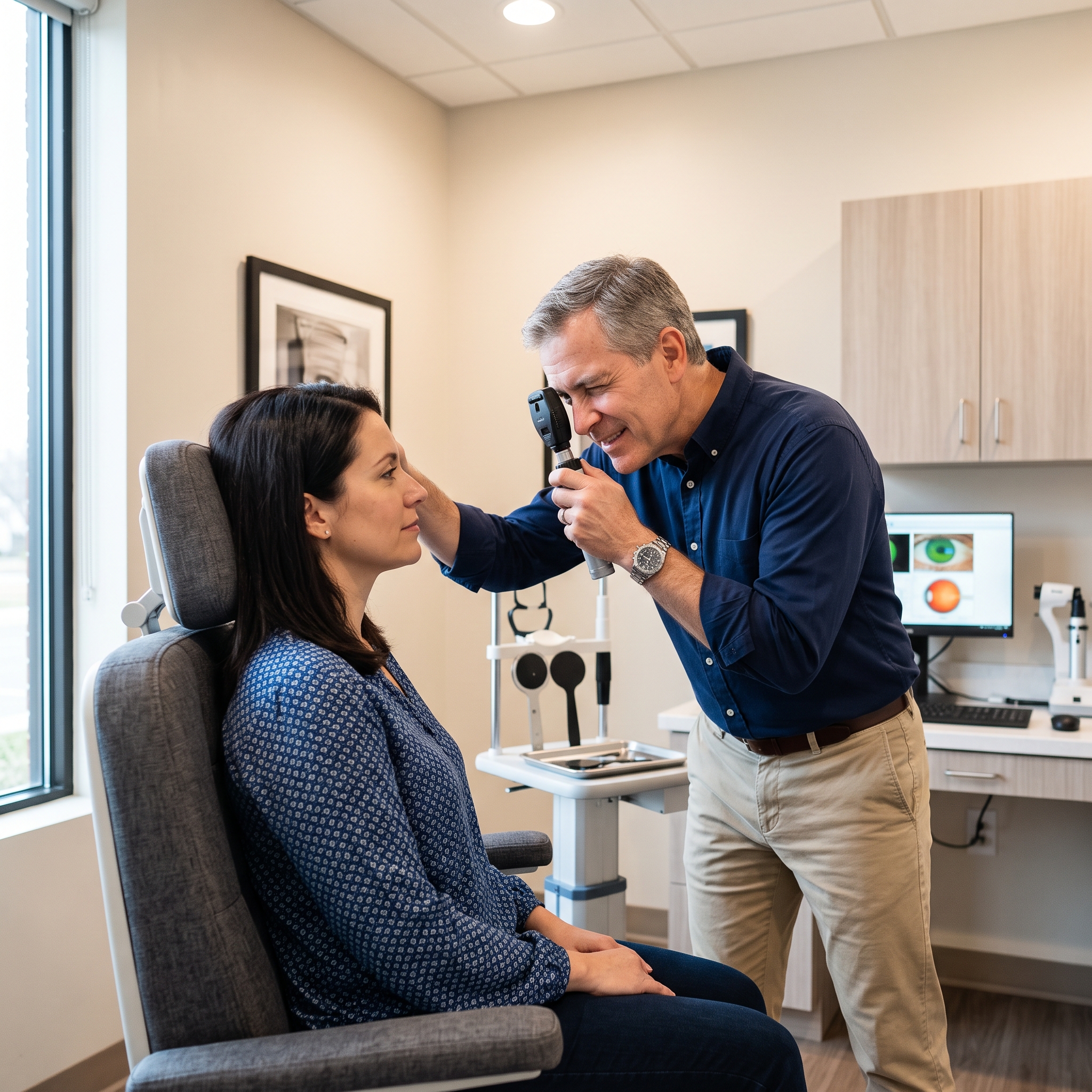
Using a slit lamp, a magnified instrument with a focused beam of light, your optometrist examines the external structures of the eye including the cornea, iris, and lens. This identifies early cataracts, corneal irregularities, and other surface conditions. The internal examination uses an ophthalmoscope or similar instrument to evaluate the retina, optic nerve, and blood vessels at the back of the eye, which can reveal signs of diabetic retinopathy, macular degeneration, and optic nerve damage. According to AllAboutVision, routine eye exams can detect early signs of more than 250 different systemic conditions, including diabetes and high blood pressure, through changes visible in the eye’s blood vessels and structures.
Dilation (When Recommended)
Your optometrist may recommend dilating your pupils using eye drops that temporarily widen them, allowing a wider and clearer view of the retina and internal structures. Dilation is especially useful for detecting early retinal changes, diabetic eye disease, and macular degeneration. The drops take approximately 20 to 30 minutes to take full effect. Your vision will be temporarily blurry up close and your eyes will be more sensitive to bright light for two to four hours afterward. Bringing sunglasses to wear after the exam is a practical idea. If dilation is recommended for your visit, arranging a driver is worth considering if you have a long drive or an important task immediately following the appointment.
You can read more about what the comprehensive eye exam at Hampden Optical includes and what patients experience on their services page.
How Long Does an Eye Exam Take?
A first eye exam as a new patient typically takes between 45 minutes and one hour. That window accounts for the health history intake, all standard clinical tests, and a discussion of results at the end. If dilation is included, add another 20 to 30 minutes for the drops to take effect before the internal exam portion can be completed.
Returning patients with straightforward eye health and no new concerns often complete their exam in 30 to 45 minutes. Patients with more complex prescriptions, existing eye conditions requiring additional monitoring, or new symptoms that require extra testing may take slightly longer.
Plan for up to 90 minutes on your first visit to avoid feeling rushed, particularly if dilation is on the schedule. That buffer means the appointment does not cut into your next commitment and you have time to ask questions at the end without hurrying.
Do Eye Exams Hurt?
No. A comprehensive eye exam involves no pain. Some parts of the exam may feel briefly unusual, but nothing should cause discomfort that lingers.
The air puff glaucoma test startles some patients because of the unexpected sensation, but it passes in a fraction of a second. The slit lamp examination uses a bright light that can feel intense momentarily, particularly if your eyes are light-sensitive. Dilation drops may cause a brief stinging sensation when applied, which passes within a few seconds.
No instruments pierce, press firmly against, or otherwise cause discomfort to the eye during a standard comprehensive exam. If you have anxiety about eye contact or medical procedures generally, telling your optometrist at the start of the visit allows them to explain each step before it happens, which most patients find significantly reduces any nervousness.
What Happens After Your Eye Exam
Once all testing is complete, your optometrist reviews the results with you directly. This is one of the most valuable parts of the entire visit and deserves your full attention.
The discussion covers your visual acuity results and whether your prescription has changed, any findings related to eye health including early disease signs or changes that require monitoring, a recommendation for how often you should return based on your specific results and risk profile, and any lifestyle guidance relevant to your eyes.
If a prescription change is needed, you will receive a written copy of your prescription before leaving. You are legally entitled to this and can use it anywhere you choose to purchase glasses or contacts.
If contact lenses are of interest, note that a contact lens fitting is a separate appointment from a comprehensive eye exam and is not automatically included. Ask specifically about scheduling a contact lens evaluation if that is something you want to explore.
For families with children, Hampden Optical’s pediatric vision screening serves children ages 5 and up and is a natural next step if your own exam reveals hereditary risk factors worth monitoring in younger family members.
What the Exam Can Reveal Beyond Vision
One reason regular comprehensive eye exams matter beyond getting an accurate prescription is what the internal eye examination can detect about your overall health. The retina is the only place in the body where blood vessels and nerve tissue can be directly observed without surgery. Changes in those structures are visible to a trained optometrist before they produce any symptoms elsewhere in the body.
Eye exams have been the first point of detection for diabetes, hypertension, elevated cholesterol, multiple sclerosis, and certain cancers. According to AllAboutVision, routine comprehensive exams can reveal early signs of more than 250 different systemic conditions. That is a meaningful part of the case for keeping your eye exam on the annual schedule, particularly as you move into your 40s and beyond when risk for both systemic and eye-specific diseases increases.
The FAQs page at Hampden Optical answers common questions about the difference between a routine vision exam and a medical eye exam, what insurance typically covers, and what to expect at each type of visit.
Final Thoughts
Knowing what to expect at an eye exam before you arrive makes the visit less intimidating and more productive. A comprehensive eye exam Mechanicsburg PA patients experience at a full-service practice takes under an hour, involves no pain, covers both vision correction and eye health in full, and ends with a clear conversation about your results and next steps.
The CDC estimates that approximately half of all visual impairment and blindness in the United States is preventable through early diagnosis and timely treatment. That prevention starts with showing up. Whether this is your first eye exam or your first visit to a new practice, the exam is well worth the time.
To schedule a new patient eye exam with an experienced optometrist in Mechanicsburg, contact Hampden Optical at 717-901-3939. Located at 4900 Car