What to Look for When Choosing an Eye Doctor in Mechanicsburg PA
The right eye doctor in Mechanicsburg, PA is someone who is licensed, experienced, offers the services your family needs, and makes you feel comfortable from the moment you walk in. For most people, that means finding a qualified optometrist who does comprehensive exams, fits glasses or contacts, and can spot early signs of eye disease before they become serious.
This guide walks you through every factor worth considering, from credentials and services to insurance, technology, and the questions to ask before you book your first appointment.
Optometrist, Ophthalmologist, or Optician: Which One Do You Need?
Before starting your search, it helps to know which type of provider is the right fit for your situation.
| Provider | Degree | What They Do |
|---|---|---|
| Optometrist | Doctor of Optometry (OD) | Eye exams, prescriptions, contact fittings, diagnosis and treatment of common eye conditions |
| Ophthalmologist | Medical Doctor (MD or DO) | Everything an OD does, plus eye surgery and advanced disease treatment |
| Optician | Certificate or diploma | Fills prescriptions and fits glasses and contacts; cannot perform exams |
For most families in Mechanicsburg, an optometrist is the right starting point. According to the National Eye Institute, a part of the National Institutes of Health, optometrists handle general eye care, routine exams, and prescription updates well. If a more serious condition develops, your optometrist will refer you to an ophthalmologist.
How Often Should You Get an Eye Exam?
This is one of the most common questions people ask, and the answer recently changed. In 2023, the American Optometric Association updated its guidelines. The new recommendation calls for annual comprehensive eye exams for all adults age 18 and older. Previously, low risk adults aged 18 to 64 were told every two years was sufficient.
The reason for the shift is straightforward. Research shows that routine exams catch problems that patients do not feel yet. A 2016 study cited by the AOA found that 58 percent of patients with no symptoms had eye changes that required some kind of action when examined routinely. Those changes included prescription updates and newly detected eye diseases.
The American Academy of Ophthalmology adds that adults with no risk factors should get a baseline comprehensive exam at age 40, then follow a schedule based on what is found. For adults 65 and older, the AAO recommends an exam every one to two years at minimum.
| Age Group | Recommended Frequency |
|---|---|
| Children (5 to 17) | Annually, starting at age 5 |
| Adults (18 to 64) | Annually, per updated AOA 2023 guidelines |
| Adults 65 and older | Every one to two years minimum |
| Diabetes, high blood pressure, or family history of eye disease | Annually, regardless of age |
What Credentials Should an Eye Doctor Have?
Credentials tell you that your provider has the training to care for your eyes safely.
Doctor of Optometry Degree
An optometrist in the United States must earn a four year college degree and then complete a four year Doctor of Optometry program at an accredited optometry school. In Pennsylvania, they must also hold a current state license. Some optometrists complete additional clinical training or specialty residencies after graduation.
Board Certification and Licensing
Pennsylvania optometrists are licensed by the State Board of Optometry. You can verify a provider’s license through the Pennsylvania Department of State. It is a quick check that is worth doing, especially with a new provider.
Continuing Education
Eye care technology and treatment guidelines change over time. A good practice stays current. Ask whether the provider attends continuing education courses and what tools or updated training they have added in recent years.
Services: Does the Practice Cover What Your Family Needs?
Not every eye care office offers the same services. Before committing to a provider, confirm they handle what you and your family actually need.
Common services to look for:
- Comprehensive eye exams for adults, including glaucoma screening, retinal evaluation, and prescription testing
- Pediatric vision screening for children, using age appropriate tools
- Contact lens fitting and sales, including specialty fits
- Dry eye evaluation and treatment
- On site lens and frame adjustments and repairs
- Custom progressives and specialty coatings
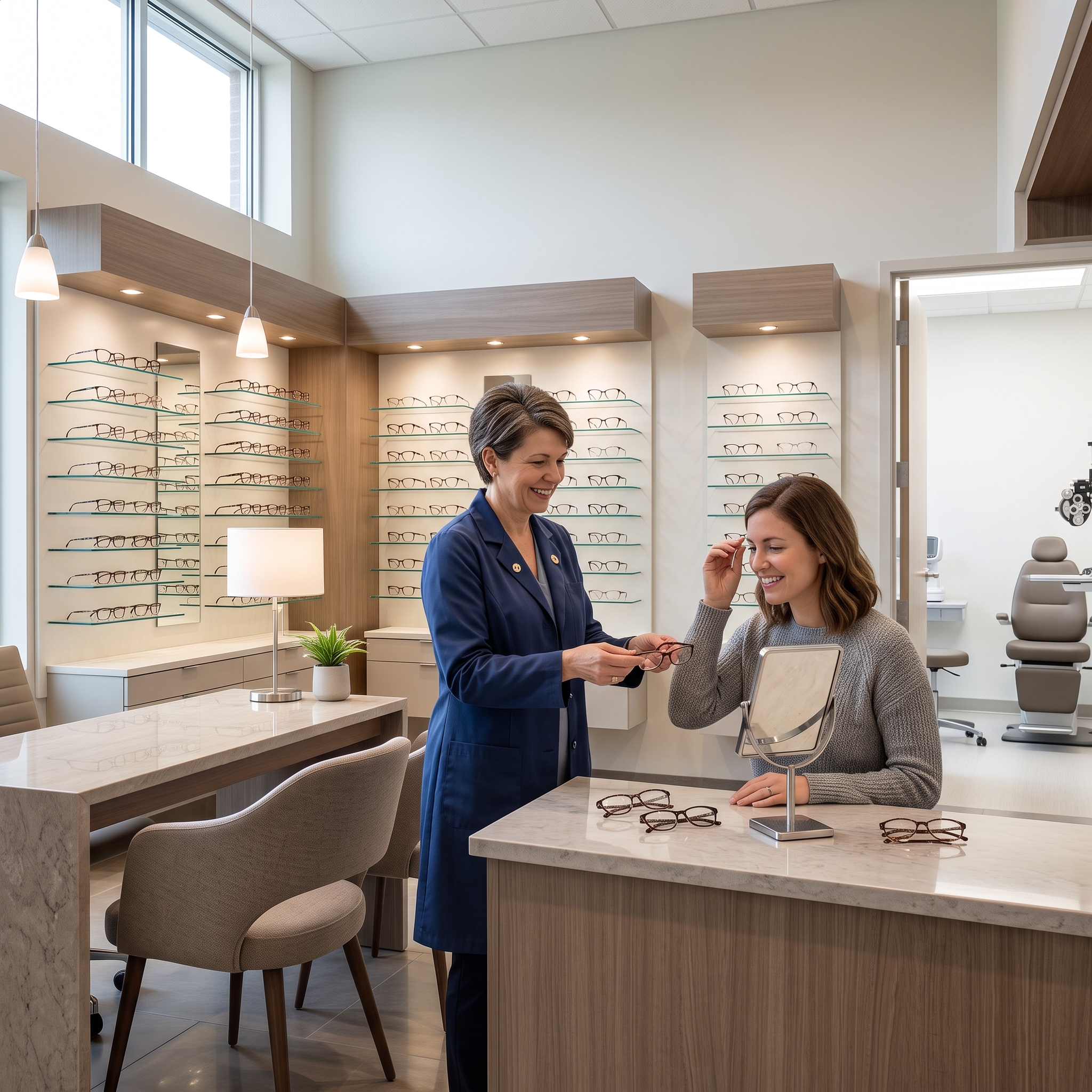
- A strong selection of eyewear frames
A practice that handles all of this under one roof saves time and keeps your care consistent. The comprehensive eye exams at Hampden Optical cover everything from visual acuity testing to diabetic retinopathy screening and eye pressure checks, so patients get a complete picture of their eye health in one visit.
If you have children, also confirm whether the practice offers dedicated pediatric vision screening. Children’s exams use different tools and a different pace than adult exams, and that matters when you need accurate results from a young child.
Why Experience and Local Reputation Matter
Years of hands on experience make a real difference in eye care. An optometrist who has worked with a wide range of patients, prescriptions, and conditions over many years has simply seen more. That depth shows up in things like fitting a difficult prescription accurately, catching subtle early signs of disease, or knowing which lens solutions work best for different lifestyles.
Local reputation matters as well. Ask neighbors, coworkers, or your family doctor for a recommendation. Patient reviews can fill in details that credentials cannot, such as how long the wait is, whether the staff communicates clearly, and whether the office feels welcoming.
Hampden Optical has been serving Central Pennsylvania since 1996. The two owners and opticians, Noelle Calzone and Michele Henry, each bring more than 20 years of experience. Dr. David Paden, the practice’s optometrist, earned his Doctor of Optometry from the Pennsylvania College of Optometry in 2005 and completed a one year residency in referral based optometry with an emphasis on ocular disease. You can read more about the full team on the Meet the Team page.
Does the Practice Invest in Modern Equipment?
The diagnostic tools a practice uses directly affect how thorough and accurate your exam is. Older equipment can miss things that newer technology would catch at an earlier stage.
Look for these capabilities when evaluating a practice:
- Advanced retinal imaging, which gives a clear view of the back of the eye without always requiring dilation
- Digital refraction systems for more precise prescription measurements
- Tonometry for accurate eye pressure testing related to glaucoma
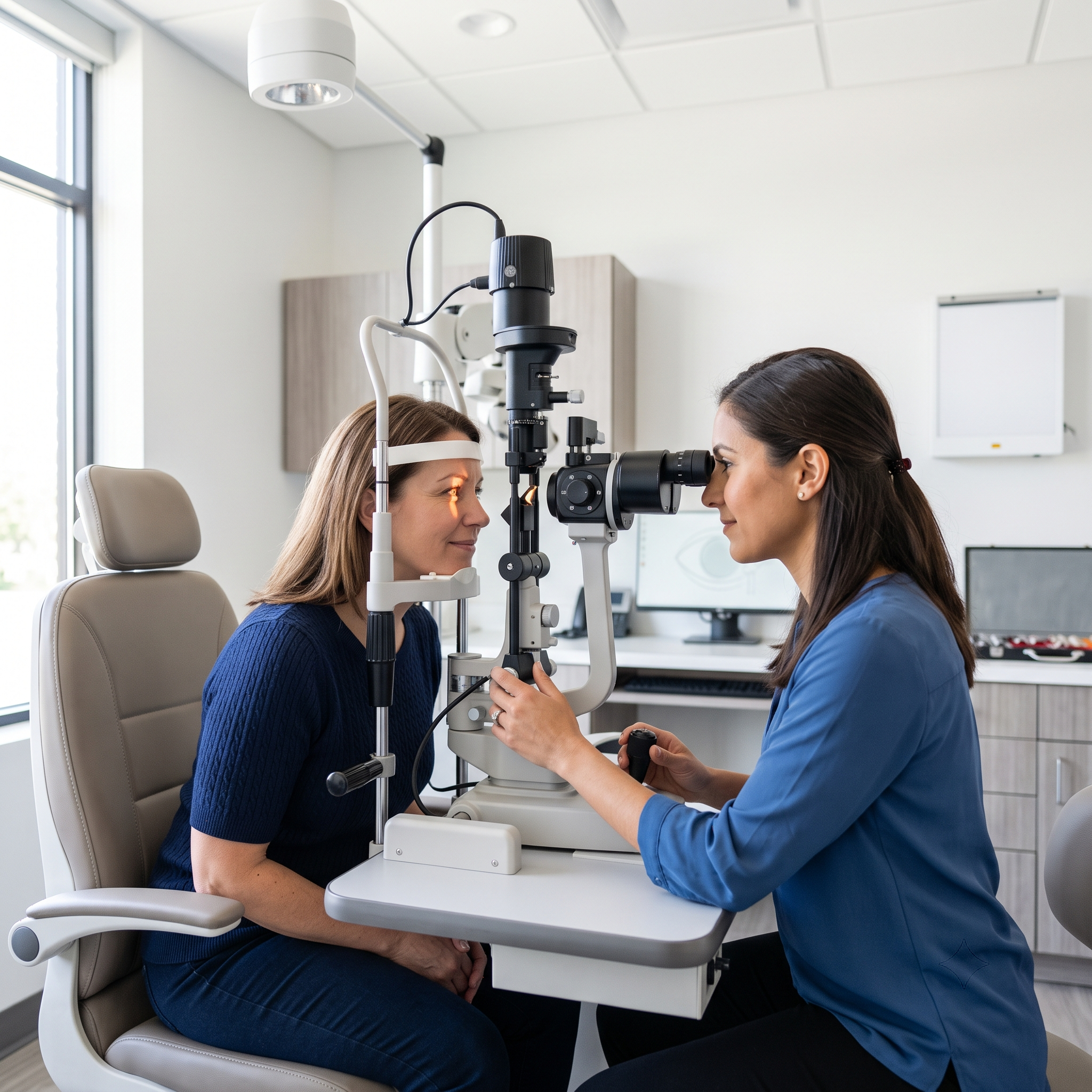
- Slit lamp biomicroscopy to examine the front structures of the eye in detail
Practices that invest in modern diagnostic tools deliver more thorough exams and are better positioned to catch conditions like glaucoma or diabetic eye disease early, when they are far easier to manage.
Insurance, Pricing, and Transparency
Eye care costs vary, and it pays to confirm the details before your appointment.
Questions to ask before you book:
- Do you accept my vision insurance plan?
- What is the out of pocket cost if I am not covered?
- Is the exam cost separate from the cost of frames or contacts?
- Do you offer any savings programs or specials on eyewear?
A practice that is upfront about pricing is usually just as clear and straightforward when it comes to your eye health. Transparency at the front desk is a good indicator of how the whole experience will go.
What to Ask During Your First Visit
Your first appointment is a good opportunity to evaluate the practice, not just get your eyes checked.
Good questions to ask:
- What does this exam include?
- How will you let me know if something needs follow up?
- Will I see the same provider at each visit?
- How do I reach you if I have a concern between appointments?
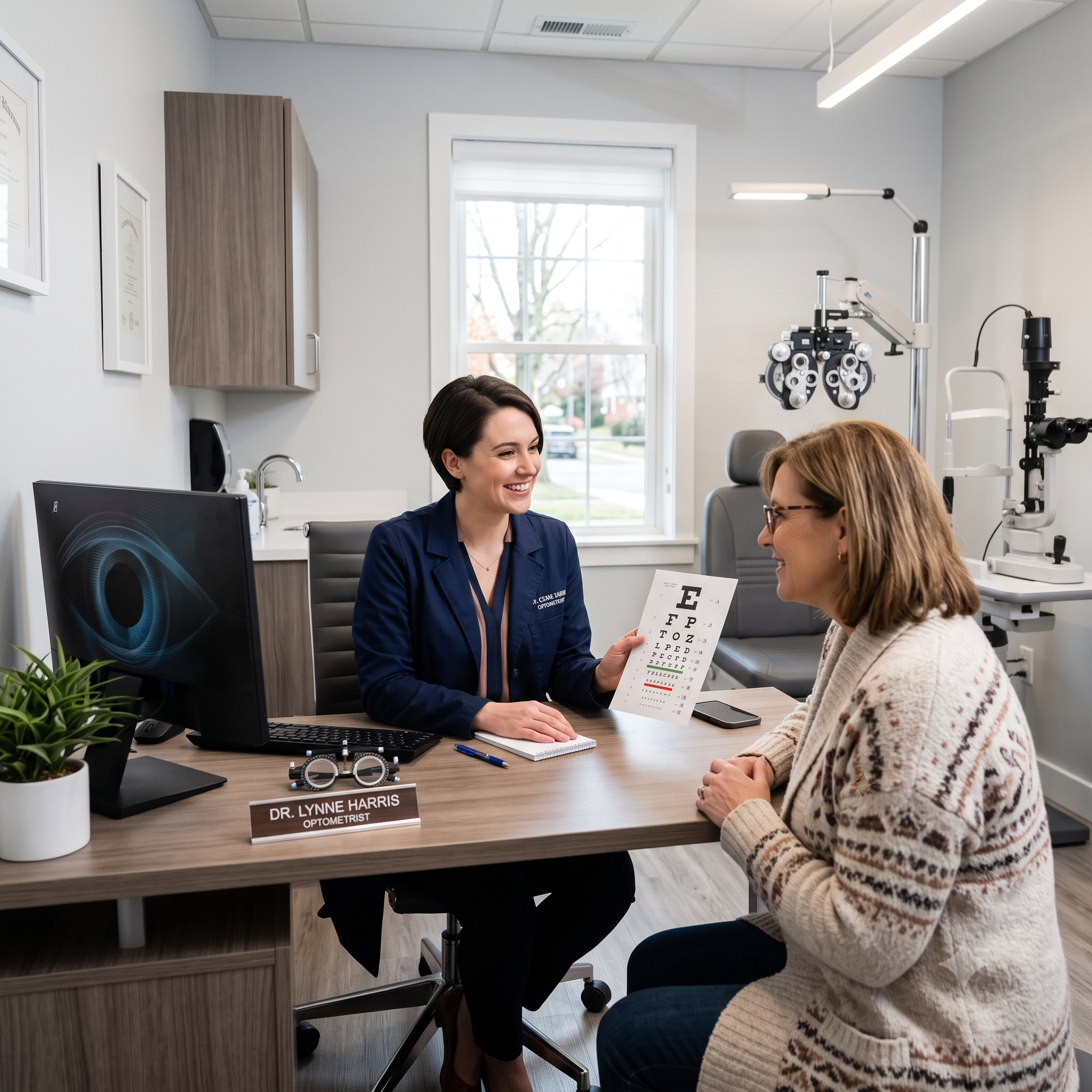
Pay attention to how the provider responds, not just what they say. A good eye doctor listens carefully, explains things in plain terms, and gives you time to ask questions.
Red Flags to Watch for When Choosing an Eye Care Provider
Not every practice is the right fit. A few things worth watching for:
- Long waits for a new patient appointment with no clear explanation
- Staff who cannot answer basic questions about insurance or services
- Pressure to buy eyewear or add ons during the exam
- Very little time with the doctor and no chance to ask questions
- No clear process for urgent or after hours concerns
If something feels off during your first visit, it is completely reasonable to look elsewhere.
Final Thoughts
Choosing an eye doctor in Mechanicsburg, PA comes down to a few straightforward things: proper credentials, the right services for your family, modern diagnostic equipment, clear pricing, and a practice where you feel genuinely cared for.
The American Optometric Association now recommends annual comprehensive exams for all adults. The National Eye Institute estimates that about half of all vision loss can be prevented with early diagnosis and timely treatment. The best time to find a provider you trust is before a problem develops, not after.
If you are ready to book an exam with an experienced, trusted team in Mechanicsburg, contact Hampden Optical at 717-901-3939 or schedule your appointment online today.