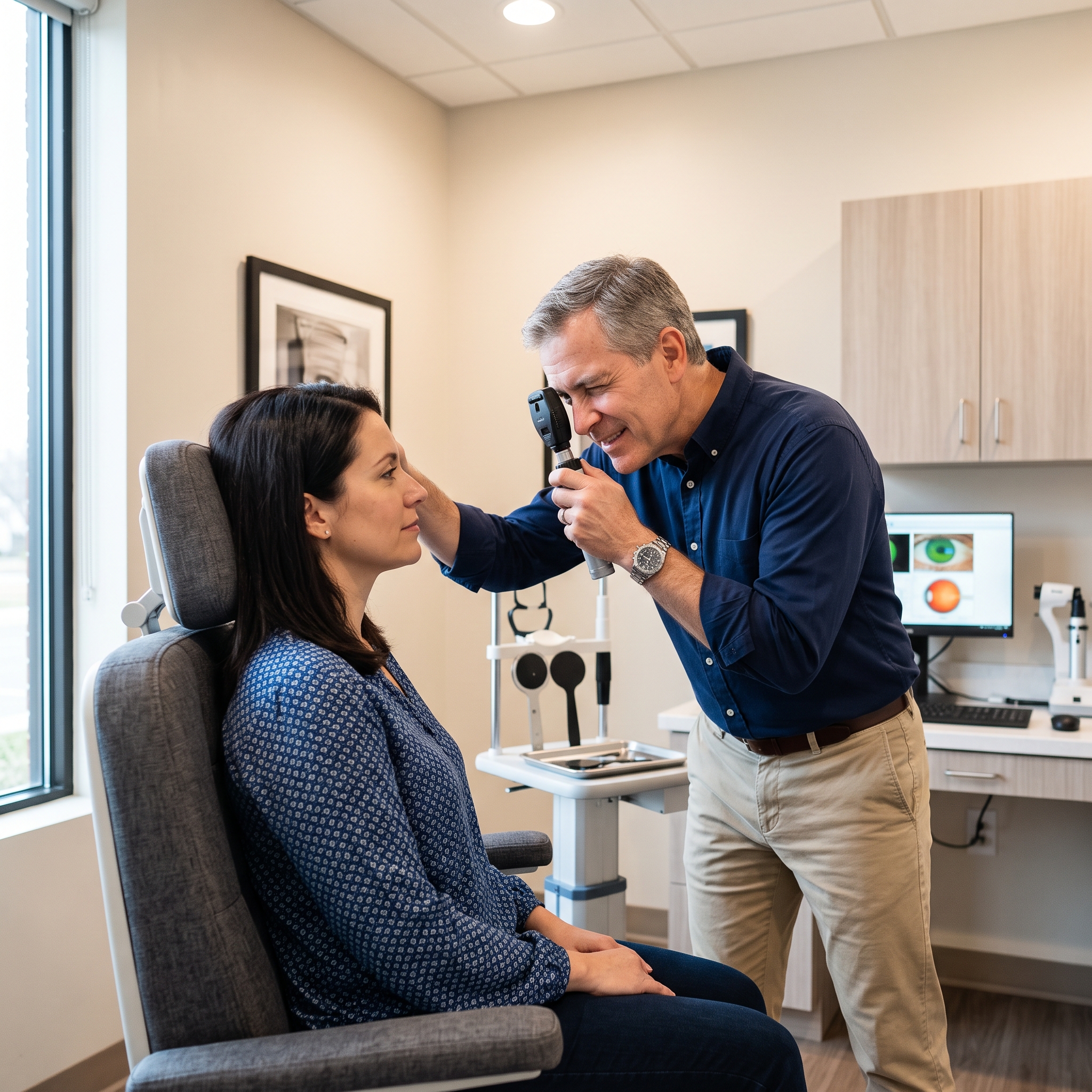
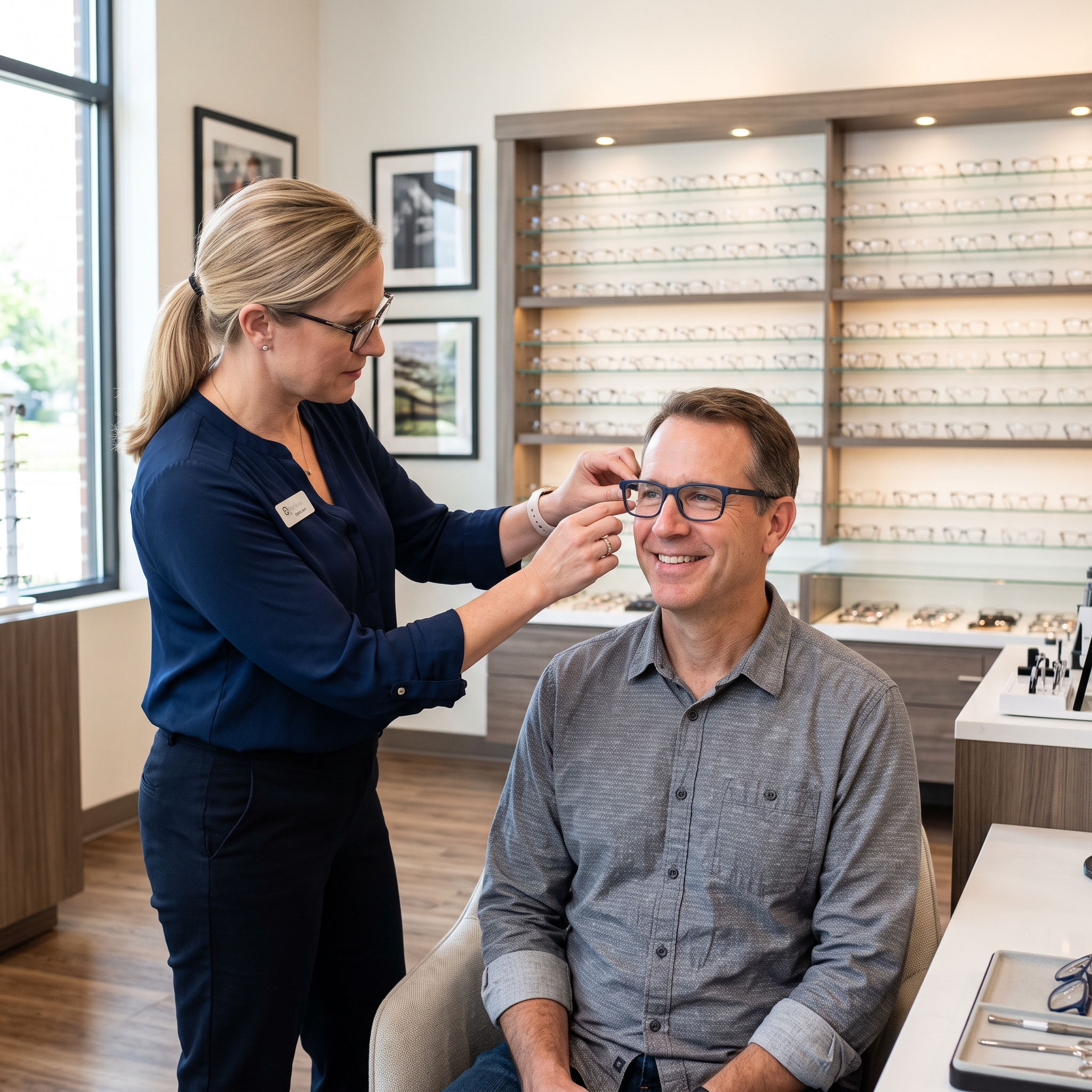
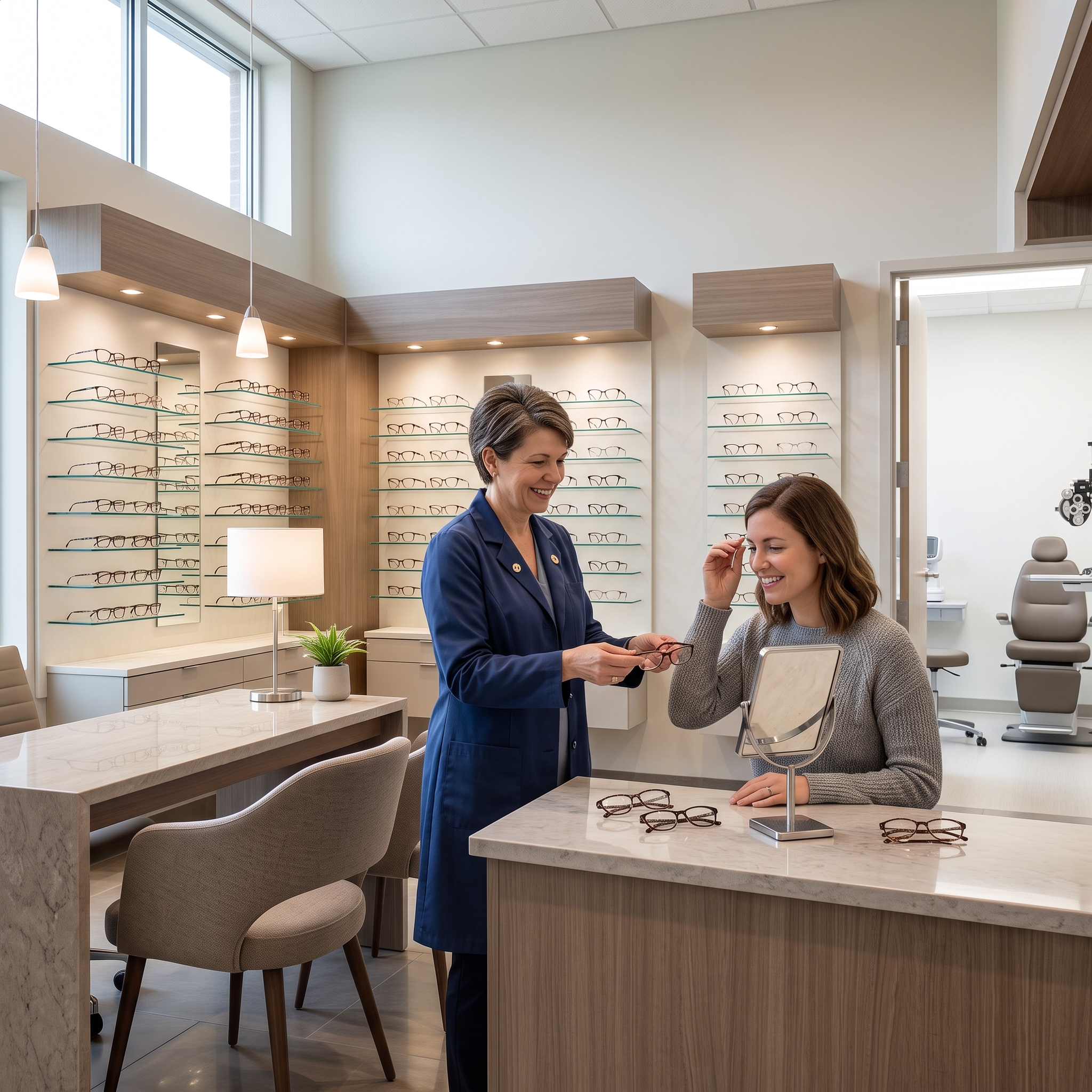
Eye care and eyewear in Mechanicsburg, PA work together because they address the same goal from two different directions. The eye exam determines what your visual system needs. The eyewear dispensing process translates that clinical finding into a physical device that delivers it correctly and comfortably every day. When these two functions are performed by the same practice, the result is more accurate, more comfortable, and better coordinated than when they are managed separately. When they are separated, information gaps and communication delays between the prescribing doctor and the dispensing optician are where the most common eyewear problems originate. This post covers exactly how the two functions interact, why integration matters for the quality of what you end up wearing, and what it looks like in practice at a full-service optical practice in Mechanicsburg.
Why Eyewear Is a Medical Device, Not a Consumer Product
The starting point for understanding how eye care and eyewear work together is recognizing what eyewear actually is. The primary purpose of ophthalmic dispensing is the optimization of visual function. Eyewear is fundamentally a medical device. Although spectacle frames possess obvious fashion and lifestyle components, corrective lenses are clinical instruments prescribed by a licensed professional to correct a diagnosed refractive condition.
This distinction matters practically. A pair of glasses that looks attractive but is fitted incorrectly, or whose optical centers do not align with the wearer’s pupils, or whose lens design was chosen without considering the prescription complexity, will not deliver the visual acuity the prescription should produce. The exam determines the correct prescription. The dispensing process determines whether that prescription is translated into eyewear that actually works.
According to an industry analysis published by ASIRA Health in 2026, the differentiating factor in quality optical care is rarely price alone. Rather, it is the integration of clinical expertise with personalized dispensing and patient-centered care. In this model, the sale of eyewear becomes a consequence of appropriate clinical recommendation rather than the primary objective of the patient encounter. That sentence describes exactly how the relationship between eye care and eyewear should function and why the two belong together in the same conversation rather than in separate transactions at different locations.
How the Eye Exam Informs Every Eyewear Decision
The comprehensive eye exam produces clinical findings that directly inform eyewear decisions that most patients do not realize are connected to what the exam found.
Prescription complexity and lens design. A mild myopic prescription in a young adult with no astigmatism is an uncomplicated lens dispensing situation. A complex prescription with significant astigmatism, a strong add power for presbyopia, and a history of adaptation difficulty with previous progressive lenses is a dispensing situation that requires significantly more clinical judgment. The optometrist who performed the exam knows the prescription history, the patient’s prior lens experiences, and the visual demands that specific occupational and lifestyle factors create. That knowledge directly shapes the lens design recommendation in ways that a dispensing optician working from a prescription slip received from a different practice cannot replicate without that context.
Frame selection relative to prescription. Not every frame accommodates every prescription effectively. A very small frame may not provide adequate lens area for a progressive lens design to incorporate both the distance and near zones comfortably. A frame with high wrap or significant pantoscopic tilt may require prescription compensation to maintain optical accuracy. A very high minus prescription requires a frame with a smaller eye size to minimize the edge thickness that is cosmetically and structurally disadvantageous in minus lenses. An optician who knows the prescription before the patient selects a frame can guide the selection toward frames that work with the prescription rather than against it.
Pupillary distance and fitting measurements. Accurate pupillary distance measurement, combined with monocular PD measurements for progressive lenses, fitting height for multifocal lenses, and vertex distance for high prescriptions, determines whether the optical centers of the lenses align correctly with the patient’s visual axes. Optical center misalignment causes prismatic effects that produce eyestrain, headaches, and in some cases double vision. A millimeter matters in ophthalmic dispensing, and these measurements must be taken from the patient wearing the chosen frame rather than estimated from a general measurement.
According to a licensed optician and program manager cited in prior industry discussion, facial measurements help ensure that when lenses are inserted into a frame, they are aligned appropriately with the patient’s pupils. That precision is what separates glasses that correct vision properly from ones that cause strain regardless of how accurate the prescription itself is.
Hampden Optical provides both comprehensive eye exams and eyewear dispensing at their Mechanicsburg practice on Carlisle Pike. Dr. David Paden OD, who completed a residency in referral-based optometry with an emphasis in ocular disease and refractive eye care, leads the clinical side. Owners Noelle and Michele, both board certified opticians with more than 25 years of experience each, lead the dispensing side. The two functions are performed by the same team, which is the integration that produces consistently better results than managing them separately.
What Happens When Eye Care and Eyewear Are Separated
Understanding why integrated eye care and eyewear dispensing produces better outcomes is clearer when you understand what goes wrong when the two functions are separated.
The most common scenario is a patient who receives an eye exam at one location and takes the prescription to an online retailer, a chain optical store, or a different independent practice for eyewear. Several specific problems arise from this separation.
Prescription interpretation without clinical context. A prescription slip contains the refractive data from the exam. It does not contain the patient’s history of adaptation difficulty with previous lenses, the optometrist’s recommendation about which progressive design is most appropriate for the prescription complexity, the specific fitting notes that apply to a high prescription or unusual astigmatism axis, or the patient’s occupational visual demands that should inform lens design selection. A dispensing optician working from the prescription slip alone is working without this context.
No direct communication when problems arise. When a patient picks up glasses that do not feel right, the most efficient resolution involves the prescribing doctor and the dispensing optician reviewing the case together. If the exam and the dispensing happened at different locations, this conversation requires the patient to coordinate between two separate practices, often with delays and the possibility of each practice attributing the problem to the other’s work.
Fitting adjustments made without prescription knowledge. Frame adjustments after dispensing affect vertex distance, pantoscopic tilt, and face form angle, all of which affect how the prescription performs optically. An optician who adjusted a frame without knowing the prescription history and the optometrist’s clinical intent is making adjustments without the full picture.
Successful independent practices increasingly recognize that the optical dispensary should not exist separately from clinical services. Instead, dispensing should support, reinforce, and enhance clinical outcomes. When the two functions are integrated, the optometrist and optician share clinical context continuously, which produces a better finished eyewear product and faster resolution when any issue arises.
How an Integrated Practice Handles a Complex Prescription
A practical example illustrates the integration benefit most clearly. Consider a patient in their mid-50s who presents with moderately complex prescription, significant astigmatism in one eye, early presbyopia requiring an add power, a history of difficulty adapting to progressive lenses, and an occupation that requires extended computer use with occasional distance viewing.
At a practice where eye care and eyewear are integrated, the optometrist completes the exam and documents not just the prescription but the add power selected based on the patient’s near visual demands, the specific progressive lens design being recommended based on the patient’s history and the prescription complexity, the vertex distance and any prescription modifications required for the chosen lens design, and the fitting considerations specific to this patient’s prescription and adaptation history.
The dispensing optician works from this complete clinical record. Frame selection is guided toward options that provide adequate fitting height for the progressive design. The progressive corridor length is selected based on the patient’s reading distance and adaptation history. Fitting measurements are taken in the chosen frame with the patient in their habitual wearing position. The lens order is placed with exact specifications documented in the clinical record.
When the glasses are ready, the fitting appointment confirms that the optical centers align with the measurements, the progressive zones are accessible in the patient’s natural reading posture, and any minor adjustments needed are made with full knowledge of the prescription and its optical implications.
If the patient returns with any concern about comfort or vision quality, the optometrist and optician review the case together and determine whether the issue originates in the prescription, the lens design, the fitting measurements, or the frame adjustment. The resolution is faster and more accurate than it would be at two separate practices communicating through a patient intermediary.
Why Lens Selection Requires Clinical Knowledge
Lens selection for any prescription more complex than simple single-vision correction requires clinical knowledge that goes beyond the numbers on the prescription slip. The decisions involved include lens material, lens design, and coating selection for the specific prescription, lifestyle, and visual demands of the individual patient.
Lens material. Standard plastic, polycarbonate, high-index, and Trivex all perform differently at different prescription powers and in different frame styles. A high minus prescription in a small frame may benefit from high-index material to reduce edge thickness. A child’s lens benefits from polycarbonate’s impact resistance. A patient with significant UV exposure concerns benefits from a material with built-in UV protection. An optician who knows the prescription and the patient’s lifestyle can make this recommendation accurately. One working from a prescription slip without that context may default to a standard recommendation that does not serve the specific situation as well.
Progressive lens design. The progressive lens category includes a wide range of designs from economy to premium, with meaningful performance differences in corridor width, visual zone size, peripheral distortion, and adaptation requirements. A patient with a history of progressive adaptation difficulty benefits from a specific design approach that an optician familiar with the exam findings and prescription history can identify and recommend. According to the Review of Optometry’s guidance on optical dispensing, personalized lens recommendations are among the most significant value elements that an integrated practice delivers over commoditized eyewear alternatives.
Coating selection. Anti-reflective coating, blue light filtering, photochromic, and UV protection coatings each serve specific clinical and lifestyle purposes. An optometrist who knows a patient spends ten hours per day at screens, drives frequently at night, and works near windows can communicate directly with the dispensing optician about which coatings will most meaningfully improve that patient’s daily visual experience. That recommendation carries more weight than a generic upsell conversation at a retail counter.
How Insurance Works Across Eye Care and Eyewear
Insurance coverage adds another dimension to the integration benefit. Vision insurance and medical insurance cover different components of eye care and eyewear, and understanding how they interact requires knowledge of both what the exam found clinically and what the eyewear prescription requires.
Vision insurance typically covers routine eye exams, prescription updates, and an allowance toward frames and lenses on an annual or biennial schedule. Medical insurance covers medically necessary eye care, which can include components of the same appointment when conditions including glaucoma, diabetic retinopathy, or other medical diagnoses are evaluated.
An integrated practice that handles both the exam and the dispensing manages this complexity as a single coordinated process. The practice applies the appropriate vision benefit to the eyewear purchase and bills any medically necessary exam components to medical insurance, maximizing the patient’s coverage without requiring the patient to manage this coordination themselves.
At a practice where the exam and the dispensing are at different locations, this coordination either does not happen, happens imperfectly, or requires the patient to understand and manage the distinction themselves, which most patients are not equipped to do.
Hampden Optical participates with EyeMed, NVA, and Medicare for exam services and submits directly to other vision plans for reimbursement. The comprehensive eye exam and eyewear dispensing are coordinated by the same team, which means coverage questions that arise during dispensing can be addressed with full knowledge of what the exam involved and what clinical findings are relevant to coverage determination.
The Long-Term Relationship Benefit
The integration of eye care and eyewear becomes more valuable over time. A practice that has provided both functions for a patient across multiple exam cycles accumulates a clinical history that makes each subsequent dispensing interaction more informed.
An optician who has dispensed multiple pairs of glasses to the same patient over five years knows that this patient tends to prefer a specific frame fit, has had success with a particular progressive corridor design, adapts best when the prescription change is introduced gradually in a modified prescription, and has a facial structure that requires specific adjustment protocols to achieve stable frame positioning. This accumulated clinical knowledge cannot be transferred from a prescription slip and is not available to any practice that sees the patient for the first time at each dispensing encounter.
According to industry analysis from ASIRA Health, independent practices maintain strong levels of patient loyalty and satisfaction precisely because this long-term relationship produces consistently better personalized care than transactional encounters at high-volume chain retailers. The integration of eye care and eyewear is the operational model that makes this long-term relationship clinically meaningful rather than merely convenient.
The pediatric vision screening service at Hampden Optical extends this integration benefit to children ages 5 and up, creating a continuous eye care and eyewear relationship for families in Mechanicsburg and surrounding communities throughout Central Pennsylvania.
Final Thoughts
Eye care and eyewear in Mechanicsburg, PA work together because the prescription produced by the exam and the eyewear that delivers it are not independent transactions. They are two phases of the same clinical process, and the quality of the finished eyewear depends on how completely the dispensing phase is informed by the clinical findings from the exam phase.
When the optometrist and the dispensing optician work in the same practice, sharing the same patient record and the same clinical context, the prescription complexity, lens design recommendation, fitting measurements, and adjustment protocols all flow from one function to the other without the information gaps that produce eyewear that does not perform as well as it should. When the two functions are separated, those gaps are where the most common eyewear problems originate.
The integration of clinical expertise with personalized dispensing is what makes a full-service optical practice in Mechanicsburg a different experience from a prescription taken elsewhere for eyewear. It is not a marketing distinction. It is a clinical one.
To experience integrated eye care and eyewear dispensing with a team that has served Mechanicsburg and Central Pennsylvania for more than 25 years, contact Hampden Optical at 717-901-3939. Located at 4900 Carlisle Pike, Mechanicsburg, PA 17050. Open Monday through Friday, 9am to 5pm.