Yes. A comprehensive eye exam can detect glaucoma — often before you notice any vision changes at all. In fact, for most people, a routine eye exam is the only way glaucoma gets caught early. This article explains exactly how that happens, which tests are involved, and why skipping your exam is a gamble you don’t want to take.
Why You Can’t Spot Glaucoma on Your Own
Glaucoma is sneaky. It’s often called the “silent thief of sight” because it causes no pain and no obvious symptoms in the early stages. By the time you notice something is wrong, the damage is already done.
Half of the people who have glaucoma don’t even realize it. The vision loss starts at the edges — your far peripheral vision goes first — and creeps inward so slowly your brain adjusts without you knowing.
That’s a scary thought. But here’s the good news: a comprehensive eye exam can catch what your eyes can’t tell you.

What Tests Are Done During a Comprehensive Eye Exam?
A comprehensive eye examination involves several tests to measure pressure in your eyes, examine your optic nerve, and test your field of vision. These tests are typically quick, non-invasive, and painless.
Here’s what each test does:
Tonometry — The Eye Pressure Check
This test measures the pressure inside your eye, known as intraocular pressure (IOP). Elevated intraocular pressure can be an early sign of glaucoma.
You may have experienced the “air puff” version — a quick burst of air hits your eye while a machine measures how your cornea responds. It’s fast, and it’s over before you can blink (no pun intended).
A more precise version, called applanation tonometry, uses a small tool that gently touches the surface of your numbed eye to get an accurate reading.
Dilated Eye Exam — Looking at the Optic Nerve
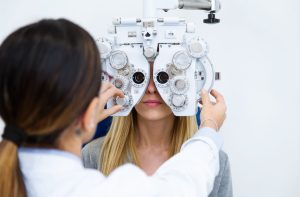
The eye doctor may use eye drops to dilate your pupils, allowing them to examine the optic nerve and other internal structures more thoroughly.
The optic nerve is the star of the show here. Doctors look at its size, shape, and color. If the cup — a depression in the middle of the optic nerve — is very large, that increases your risk. If there’s asymmetry between one eye and the other, that’s suspicious as well.
Visual Field Test — Checking Your Side Vision
Perimetry, or visual field testing, checks for areas of vision loss. Glaucoma often affects an individual’s mid-peripheral vision first, so this test is crucial for detecting early signs of the disease.
You stare straight ahead and press a button each time you see a small light appear off to the side. It feels like a video game, but the results can reveal blind spots you didn’t even know were there.
Pachymetry — Measuring Corneal Thickness
Pachymetry is a simple, painless test that measures the thickness of the cornea. A thin cornea is a risk factor for glaucoma. Corneal thickness also has the potential to influence eye pressure readings.
This matters because a thinner-than-average cornea can make your eye pressure look normal when it’s actually higher than it should be.
Gonioscopy — Examining the Drainage Angle
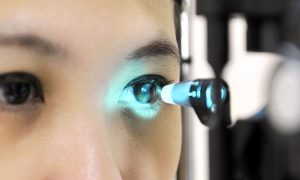
If your eye care specialist thinks you have glaucoma, you may have a gonioscopy to see if your eye’s drainage system is open (open-angle glaucoma) or closed (close-angle glaucoma).
This test is usually done when other results raise a red flag. A tiny mirrored lens is placed on your numbed eye, and the doctor gets a direct look at where fluid is supposed to drain.
OCT Imaging — A Closer Look at the Nerve
Optical coherence tomography (OCT) makes images of the back of your eye that can show damage to the optic nerve. Nothing touches your eye — you simply rest your chin on a machine while it scans your retina and nerve layers in detail. The results are available immediately and can be compared over time to track any changes.
What the Tests Check at a Glance
| Test | What It Measures | Why It Matters |
|---|---|---|
| Tonometry | Eye pressure (IOP) | High pressure can signal glaucoma |
| Dilated Exam | Optic nerve shape & color | Shows nerve damage |
| Visual Field | Peripheral vision | Detects early blind spots |
| Pachymetry | Cornea thickness | Affects pressure readings |
| Gonioscopy | Drainage angle | Identifies type of glaucoma |
| OCT Imaging | Nerve fiber thickness | Tracks progression over time |
How Often Should You Get Tested?
The American Academy of Ophthalmology suggests that people at risk for glaucoma have complete eye exams according to the following schedule: ages 40 to 54, every one to three years; ages 55 to 64, every one to two years; ages 65 and older, every six to 12 months.
If you have risk factors — family history, high eye pressure, African or Hispanic heritage, diabetes, or a past eye injury — you may need to start earlier and go more often.
What Else Can an Eye Exam Catch?
Here’s a bonus: while checking for glaucoma, your eye doctor may also spot other conditions you weren’t expecting. The comprehensive nature of these exams can also reveal cataracts, macular degeneration, diabetic retinopathy, and dry eye syndrome.
One visit. Multiple answers. That’s a pretty good deal.
If you’re dealing with dry, irritated eyes on top of everything else, our dry eye and allergy care services can help.
Final Thoughts
A comprehensive eye exam is your single best tool for catching glaucoma before it steals your vision. The tests are quick, painless, and can reveal problems you’d never notice on your own. Regular eye exams are crucial for detecting glaucoma because most people with the condition don’t experience any symptoms until they’ve already suffered significant vision loss.
Don’t wait for something to feel wrong. Schedule a comprehensive eye exam at Hampden Optical and let our experienced team check what you can’t see for yourself.
For more trusted information, visit the Glaucoma Research Foundation, MedlinePlus, or the American Academy of Ophthalmology.